📌 Key takeaways
- Opening a trampoline park requires an investment of €200,000 to €900,000 depending on size, or even more for a large facility.
- A trampoline park is both a public-reception establishment (ERP) and a physical and sports activities establishment (EAPS): both impose strict safety obligations.
- The project is built in six steps: market study, business plan, ERP premises, equipment and standards, recruitment, then launch.
- The model rests on time slots, birthday parties and groups: without online booking, you lose sales and suffer last-minute absences.
- Budget for around 800 m² minimum and nearly three months of works before opening.
On a Saturday afternoon, it’s chaos: thirty or so children bounce around, three birthday parties run back to back, and at reception the phone won’t stop ringing to book the 3 p.m. slot. Welcome to the reality of a trampoline park that works. Behind the fun image and spectacular jumps lies a real business project, demanding in capital, regulation and organisation. Opening a trampoline park means combining the energy of a leisure venue with the rigour of a public-reception establishment. How much does it really cost, what authorisations do you need, how do you fill your slots without drowning in calls? This guide covers the whole topic: what a trampoline park is, the budget to plan, the essential regulations, and the six-step method to open yours, right up to setting up bookings.
What is a trampoline park and who is it for?
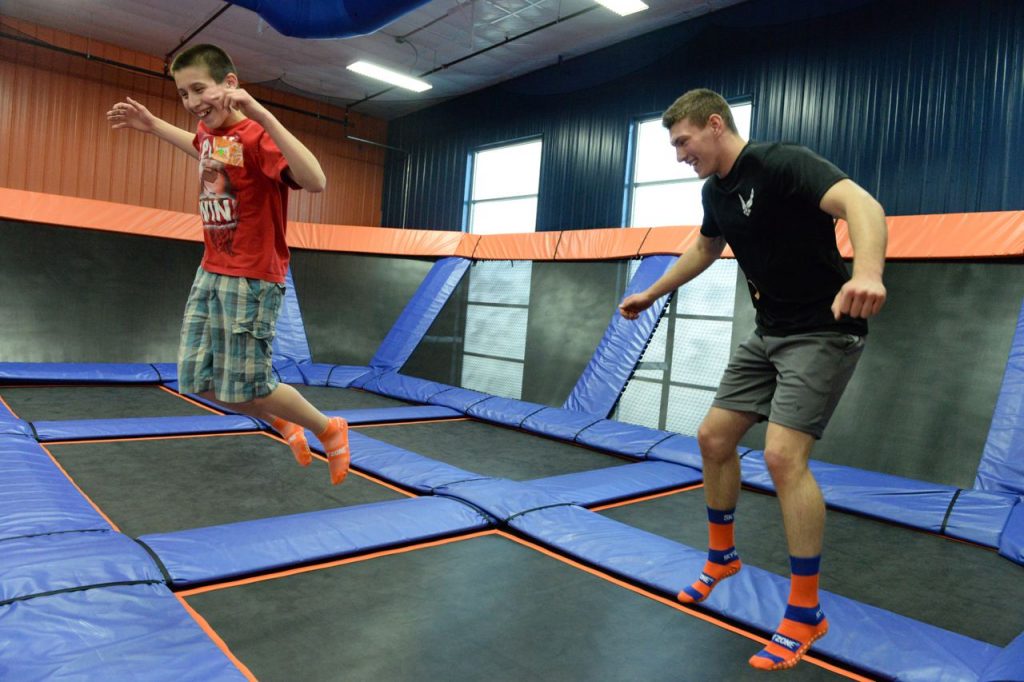
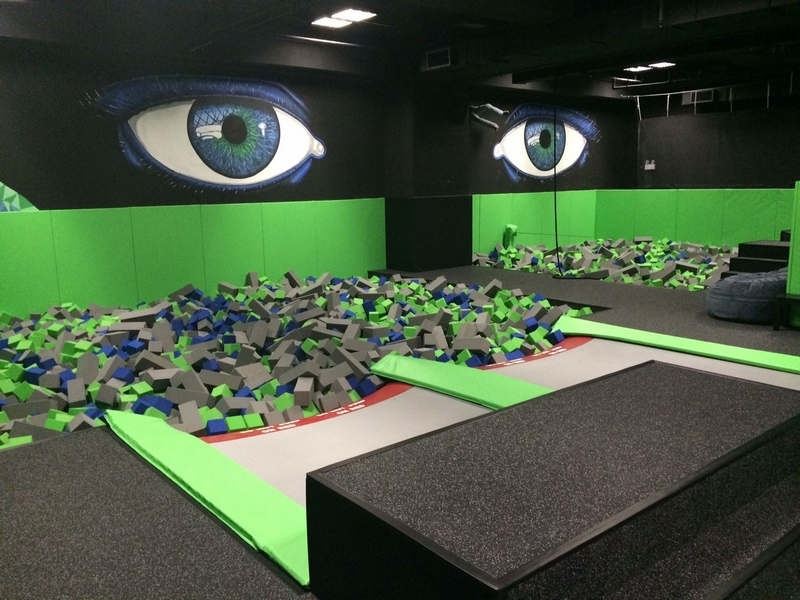
A trampoline park is an indoor leisure space where you jump freely on dozens of interconnected trampolines, complemented by play zones: foam pits, acrobatic basketball, dodgeball, ninja courses. It’s a hybrid concept, between sport, entertainment and a group outing, that has exploded in France over the last ten years. Its audience is broad, which is its commercial strength.
What are the target audiences?
A trampoline park lives off several complementary audiences spread across the week. Families and children fill Wednesdays, weekends and school holidays. Teenagers and young adults come with friends at the end of the day. Finally, birthday parties, school groups and corporate seminars form a high-value clientele, often booked in advance. This diversity smooths the activity, but requires managing highly variable slots and capacities.
Is the market still promising?
After a wave of rapid openings, the sector has structured and professionalised. The parks that succeed are no longer just those with the finest trampolines, but those that master their management: fill rate, impeccable safety and a smooth customer experience. Competition exists, which makes the local market study absolutely decisive before getting started. A good location and a sufficient catchment area remain the first success factors.
What budget to open a trampoline park?
It’s the question that discourages or motivates: opening a trampoline park represents a heavy investment, matching the areas and equipment required. The budget varies greatly according to the scale of the project, as this summary shows:
| Type of facility | Starting investment | Indicative area |
|---|---|---|
| Entry-level facility | €200,000 to €300,000 | from 800 m² |
| Classic trampoline park | €300,000 to €900,000 | 1,000 to 2,000 m² |
| Large facility | €900,000 to €1,400,000 | over 2,000 m² |
| Contribution for a franchise | from €100,000 | depending on the network |
On top of this initial investment come high monthly operating costs, dominated by payroll and rent, which can exceed €100,000 a month for a large facility. Before costing it, build a serious forecast: our tips for building a solid business plan apply directly to a leisure project like this one.
💡 Good to know: Allow on average three months of works between signing the lease and opening the doors. This period with no revenue, but with rent and charges, must be funded in your cash-flow plan. Many projects underestimate this initial gap.
What regulations to open a trampoline park?
A trampoline park isn’t an ordinary business: it welcomes the public and offers a physical activity, which places it under demanding dual regulation. Neglecting it risks an administrative closure. Two statuses combine:
- The public-reception establishment (ERP): opening authorisation, fire-safety standards and accessibility.
- The physical and sports activities establishment (EAPS): mandatory declaration and hygiene and safety guarantees.
- A liability insurance suited to the activity, essential from opening.
As an ERP, an administrative authorisation is required before any opening, and non-compliance can lead to closure as well as heavy penalties (Bpifrance Création).
As a sports activity, your facility also falls under the status of a commercial physical and sports activities establishment, with its own declaration obligations (Bpifrance Création).
Why is a booking system vital for a trampoline park?
People often think a trampoline park is managed at reception, on a case-by-case basis. It’s a costly mistake. The model rests entirely on limited-capacity slots: too many people and it’s dangerous, not enough and it’s a dead loss. Online booking isn’t a gadget, it’s the nervous system of the business.
Why manage your slots online rather than at reception?
Managing entries at the counter creates queues, refusals on Saturday and empty rooms on Tuesday. A booking system displays available spots per slot in real time, collects payment in advance and smooths attendance. Pre-payment also reduces last-minute absences, those no-shows that ruin a slot blocked for nothing. It’s exactly the logic of good management of tourism and leisure bookings, applied to jumping.
🎯 Our tip: At Tourbiz, what our clients managing slot-based activities quickly notice is the impact of pre-payment on birthday parties. Once the deposit is collected online, families cancel much less, and your weekend schedule becomes reliable instead of being a lottery.
Why do birthdays and groups require a dedicated tool?
Birthday parties and groups represent a major share of a trampoline park’s revenue, but they’re also the most complex bookings: a variable number of children, packages with catering, privatised slots, quotes for works councils. Without a tool, this is managed on a notebook and by phone, with its share of errors and duplicates. A system that automates quotes and links each booking to the schedule saves considerable time and professionalises the park’s image.
💡 Ready to fill your slots without picking up the phone?
Manage slots, birthday parties, groups and online payments with Tourbiz, the all-in-one software designed for leisure activities. Free trial, no card required.
Create my free accountHow to open a trampoline park in 6 steps?
Here’s the concrete roadmap, in six steps, to go from idea to opening. Each step specifies the actions, tools and cost benchmarks, for a project owner starting from scratch.
Step 1: carry out the market study
Before any investment, validate local demand and competition in your area. This step can be done for free with public data before, if needed, entrusting it to a consultancy. Analyse:
- The catchment area: population within 20 minutes, share of families, free data on the INSEE (French statistics office) website.
- The competition: other parks and indoor leisure within a 30 km radius.
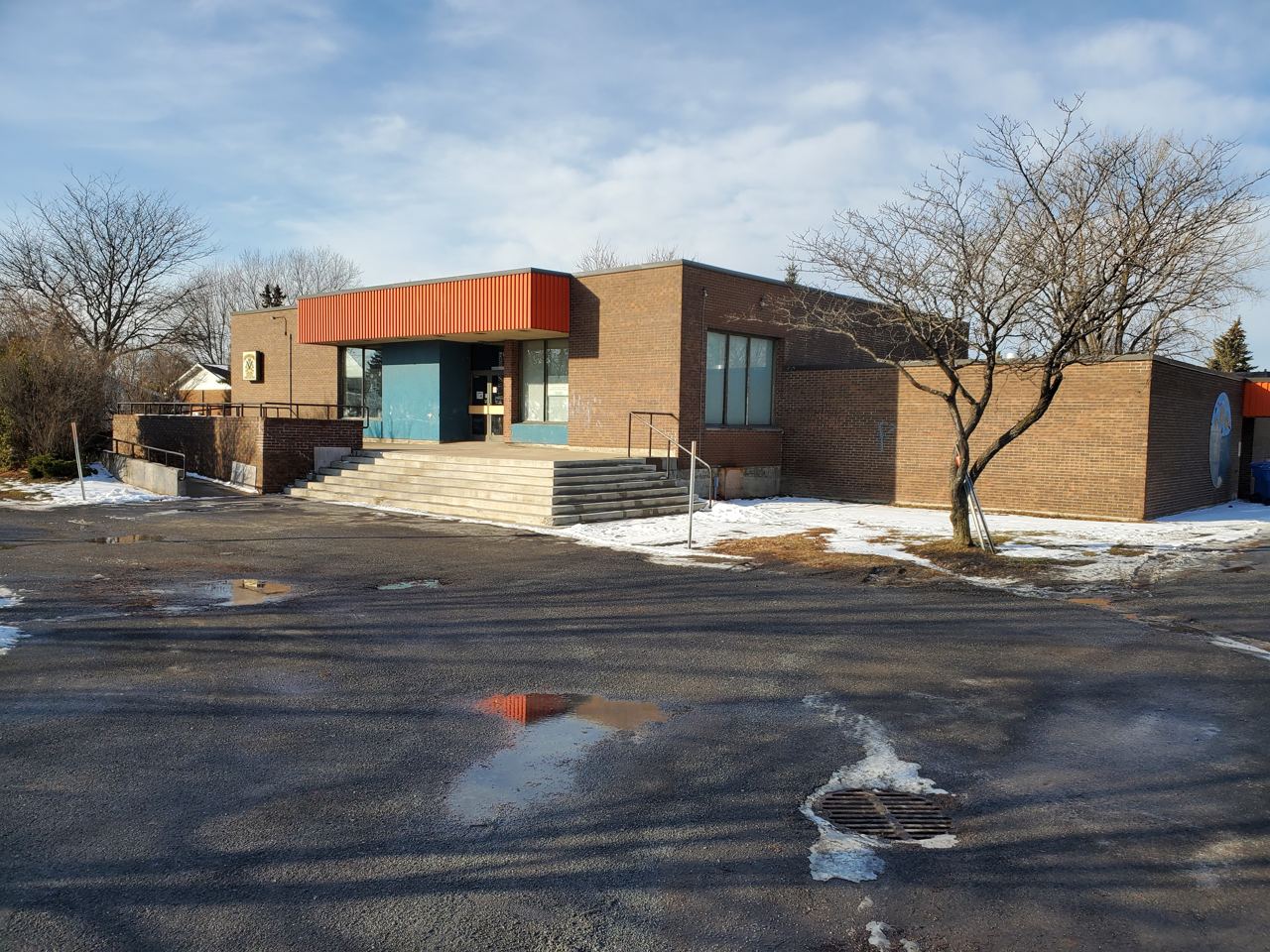
- The potential premises: area, access, parking, visibility from a busy road.
Step 2: build the business plan and find funding
The business plan turns your intuition into a fundable project. It costs the investment, the forecast and the break-even point, an essential document to convince a bank. You can write it for free from an online template, or entrust the forecast to an accountant for around €1,000 to €2,000. Prepare these elements:
| Item | Benchmark | Comment |
|---|---|---|
| Personal contribution | 20 to 30% of the total | Often required by banks |
| Bank loan | the balance | Over 7 to 10 years in general |
| Forecast | over 3 years | Include the 3 revenue-free months |
Step 3: find and fit out the ERP premises
The premises condition everything: area, ceiling height, ERP compliance. Aim for at least 800 m² and negotiate a lease that covers the works period. On the budget side, keep in mind:
- A rent that can reach €20,000 to €25,000 a month for a large area in a commercial zone.
- A ceiling height of 5 to 6 metres minimum for the jump modules.
- The ERP compliance works: fire safety, emergency exits, accessibility.
Step 4: install the equipment and guarantee safety
This is the heart of the experience and the main expense item. Call on a specialist manufacturer who installs compliant modules and handles maintenance. Anticipate these costs:
| Equipment | Indicative budget | Role |
|---|---|---|
| Trampoline modules and zones | €150,000 to €600,000 | The heart of the park |
| Nets, foams and protections | included in the installation | Jumpers’ safety |
| Annual inspection and maintenance | a few thousand euros a year | Compliance over time |
Step 5: recruit and train the team
A trampoline park doesn’t run without staff: reception, zone supervision, birthday-party hosting, maintenance. Payroll is the first operating item, around €50,000 a month for a large facility. Plan for:
- Supervising hosts trained in safety, in sufficient numbers per zone.
- An operations manager to steer the schedule and bookings.
- First-aid training for the entire team.
Step 6: launch online booking and communicate
Final step before opening: make your park bookable and get it known. Set up an online booking system, often available for free on a starter plan, and activate your acquisition channels. To attract your first customers, draw on our leads to find customers in tourism and leisure. Focus on:
- Online slot and birthday-party booking, with payment or deposit.
- A local presence: Google profile, social media, school partnerships.
- A launch offer to fill the first weeks.
How does Tourbiz simplify booking for a trampoline park?
A trampoline park is precisely the type of activity we designed our tool for: slots, capacities, prices by age and groups to manage continuously. At Tourbiz, you configure each session with its times, spots and adult, child or group prices from product creation, then display it as direct booking on your site. Spots are blocked in real time, which avoids overbooking a slot and conflicts at reception.
For birthday parties and works councils, our quote management automatically creates, sends and tracks proposals, linked to orders and the schedule. You connect the payment method of your choice to collect a deposit that secures the booking, and all your sales, online and at reception, are centralised in a single back office. You keep your eyes on the floor while booking runs itself.
Conclusion
To get more from each slot, yield management adjusts your prices to real demand.
Opening a trampoline park is a fine project, but first and foremost a matter of rigour: a heavy investment, dual ERP and sports regulation, and a business model that doesn’t forgive sloppiness on slots. Success comes down to a balance, the energy of a leisure venue on one side, meticulous management on the other. Prepare an honest market study, a business plan that factors in the three revenue-free months, and choose premises worthy of your ambitions. Above all, never neglect the booking piece: it’s what turns Saturday’s crowd into reliable revenue and secures your birthday parties. The rest, your jumpers will take care of, with a smile on their faces.