📌 Key takeaways
- Activity tourism is one of the most accessible sectors for starting a business: many activities begin with a limited investment and a micro-business status.
- The best ideas combine a personal passion, an identified local demand and the ability to distribute online from day one.
- Profitability depends less on the number of customers than on controlling fixed costs, the fill rate and the margin per service.
- Being present on OTAs (GetYourGuide, Viator) from launch multiplies visibility with no advertising investment.
- Booking management software becomes essential from 20 to 30 bookings a month: beyond that, manual management costs more in time than a dedicated tool.
Why start a tourism activity in 2026?
Activity and experience tourism is one of the most dynamic segments of the sector. Unlike hospitality or catering, it doesn’t always require heavy infrastructure: a hiking guide can start with their shoes and a certificate, a cooking-workshop organiser can begin in a shared kitchen, an e-bike renter can launch with five leased bikes.
What has changed in recent years is distribution. Before 2015, a local provider depended almost exclusively on word of mouth and tourist offices. Today, GetYourGuide, Viator, Google Things To Do and dozens of specialised platforms let any local operator be visible to travellers worldwide from their very first month.
The risk hasn’t disappeared. Tourism remains a seasonal sector, subject to the weather, unforeseen events and intensifying competition. But for those who can choose their niche, structure their offer and steer their costs, the opportunities are real.
1. Guided tours and local circuits
It’s the most widespread idea — and one of the most solid when well executed. A guide passionate about their territory, city, neighbourhood or a specific theme (architecture, gastronomy, underground history, street art) can build a differentiating offer with little initial investment. The model comes in walking, cycling, minibus, boat or private-group formats.
What makes the difference between a guide who fills their slots and one who struggles is rarely the quality of the tour. It’s the ability to distribute and be found: an optimised Google Business Profile, a presence on GetYourGuide or Viator, well-managed customer reviews. Our article on the business plan for a guided-tour activity details how to build a viable model before launching.
What to plan for: depending on the region and type of tour, a professional tour-guide card may be mandatory. Professional liability insurance is essential. The micro-business status is fine to start.
2. E-bike rental and outings
The e-bike has transformed bike tourism. Territories that were only accessible to seasoned cyclists are now doable by anyone — seniors, families, tourists with no particular fitness. Vineyards, forests, coastlines, greenways: the e-bike has opened entire markets.
The business model can be purely rental (hourly or daily), guided (small-group outings), or combined with local accommodation and dining in a circuit logic. Seasonality is pronounced, but some territories run ten to eleven months. The initial investment is more significant — a professional-grade electric bike costs between €2,500 and €4,000 — but it can be financed through leasing.
What to plan for: mandatory fleet insurance, annual maintenance and servicing, secure storage space. The real utilisation rate of the bikes must be modelled precisely in the business plan.
3. Wine-tourism and farm-tourism experiences
Wine estates, farms, cheese dairies and artisanal distilleries have understood that a direct customer experience generates more margin than long-chain sales. A guided tasting with a cellar visit at €25 per person, a blending workshop at €60, an immersive harvest stay: these formats combine direct revenue, loyalty and reputation.
This model isn’t reserved for large estates. A small 8-hectare farm can generate significant tourism revenue if the experience is well built and well distributed. The key is to treat the tourism activity as a real profit centre separate from the production activity. Our guide on creating a travel agency covers the specific obligations tied to packaged offers that include accommodation and activities.
What to plan for: depending on the format, tourism-operator registration may be required for certain packaged offers. Public-reception standards apply as soon as groups visit the premises.
4. Wellness tourism and themed retreats
Yoga retreats in nature, mountain meditation stays, hiking and reconnection weeks, breathing and mindfulness courses: this segment has exploded since 2020 and keeps growing. The typical founder profile is often a practitioner (yoga teacher, coach, therapist) who wants to monetise their expertise in an intensive format.
The strength of the model is the high value per participant: a 5-day retreat can generate between €600 and €1,500 per participant, where a guided tour brings in €30 to €60. The weakness is the dependence on a network of prescribers and the practitioner’s personal reputation. Our article on strategies to find clients in tourism gives concrete levers suited to low-volume, high-ticket activities.
What to plan for: partner or in-house accommodation, professional liability insurance suited to wellness activities, clarity on the legal framework if care services are included.
5. River or sea cruises and boat trips
Gastronomic cruises on a canal, traditional-boat trips on a river, sunset sailing outings, RIB excursions to coves inaccessible on foot: local water tourism is a promising segment, with solid demand on coastlines and river territories.
The model is more capital-intensive than activities without heavy equipment, but it creates higher barriers to entry — which protects well-established operators. A well-filled trip boat with 20 passengers at €35 each generates €700 per outing. Over a 90-day season with two daily outings, the potential is real. Our page on managing cruises and boat trips details the operational specifics of this type of activity.
💡 Good to know: A coastal or inland boating licence, a certificate of competence and boat registration are mandatory. The navigation category defines the authorised zones and the required safety equipment — all things to anticipate well before the first customer.
6. Bus tours and coach circuits
Panoramic bus tours in major cities, themed minibus circuits (vineyards, heritage, nature), tourist shuttles between sites: this segment remains very open in rural or semi-urban areas. An 8-seat minibus with a guide-driver can generate between €800 and €2,000 a day in high season in an attractive territory.
The model works particularly well in B2B (works councils, inbound agencies, partner hotels) alongside B2C. Schedule management gets complex as soon as several vehicles and guides are involved — our page on management software for bus tours explains how to structure the operation of this type of activity.
What to plan for: a category D licence and passenger-transport qualification for paid transport, a public-transport authorisation issued by the prefecture, specific passenger insurance.
7. Craft workshops and experiences
Pottery classes, natural soap-making workshops, introductions to instrument-making, regional cooking classes, plant-dyeing workshops: craft tourism attracts customers looking for authentic experiences and a return to making things. This segment lends itself particularly well to weekends and short stays.
The strength of the model is natural differentiation: an artisanal knife-making workshop in Thiers or a pottery class in Provence has no identical direct competitors. The product is inherently unique. The weakness is the dependence on the craftsperson themselves — hard to scale without training and delegating.
⚠️ Watch out: Some craft trades are regulated and require a diploma or professional qualification to teach commercially. Public-establishment (ERP) rules may apply if groups visit the workshop.
8. Outdoor and adventure activities
Via ferrata, canyoning, tandem paragliding, tree climbing, guided rock climbing, sea kayaking: outdoor adventure activities enjoy sustained demand, driven by customers seeking strong experiences rather than contemplative visits. The market is more technical but also more lucrative — a tandem paragliding introduction is billed at between €80 and €150.
Supervising outdoor physical activities is strictly regulated: state diplomas required, declaration to the regional youth and sports authority, specific professional liability insurance. These barriers to entry protect qualified operators.
What to plan for: a state diploma suited to the activity (BEES, DE-JEPS, BPJEPS — French sports-instructor qualifications), mandatory declaration, certified equipment inspected annually. Seasonality is often more constrained than in other activities — weather conditions have a direct impact on the completion rate.
9. Gastronomic circuits and experiences
City food tours, dinners with locals, market visits with a chef, immersive cooking classes: gastronomic tourism is one of the fastest-growing segments of experience tourism. It works well in urban areas (food tours in Marseille, Lyon, Bordeaux, Paris) but also in rural territories (cheese, charcuterie or natural-wine circuits).
The perceived value is high and justifies stronger prices than classic tours. A 3-hour food tour with tastings included can be billed at between €60 and €120 per person. The condition: a rigorous selection of partner producers and addresses, and an ability to bring a story about the territory to life.
10. Cultural and heritage experiences
Visits to listed sites with cultural mediation, escape games in historic monuments, living historical reenactments, sound trails in places of memory: this segment enjoys strong institutional legitimacy and natural partnerships with local authorities, museums and tourist offices.
The model can be designed from the start with a B2B logic (school groups, works councils, business tourism) that offers better revenue visibility than pure B2C. Public funding (regional cultural authorities, regions, municipalities) is sometimes accessible for innovative cultural projects.
How to actually get started: the key steps
Whatever idea you choose, the launch process follows the same major steps. The first is to validate the market locally before investing: are there already operators for this activity in your territory? If so, do they seem fully booked? If not, is it because the market doesn’t exist or because no one has created it yet?
The second step is choosing the legal status. The micro-business is the natural entry point for testing a tourism activity with little risk. It has revenue limits and doesn’t suit all regulated activities, but it lets you start quickly. Our article on the legal status for a tourism activity details the options available depending on the type of activity and the level of structuring targeted.
The third step is putting the offer online. A simple website with an online booking system, an optimised Google Business Profile and a presence on at least one OTA are the minimum foundations of effective visibility from day one.
🎯 Our tip: At Tourbiz, we recommend our clients connect to at least two OTAs from launch — GetYourGuide for European customers seeking impulsive activities, Viator for North American customers. Our article on the comparison of the best OTAs helps choose the platforms best suited to each type of activity.
How Tourbiz supports tourism activity founders
Many tourism activity founders start with makeshift tools: an Excel file for bookings, manual transfers, confirmation emails written by hand. It works for the first ten bookings. As soon as the volume rises, the system shows its limits — and it’s often in the middle of high season, at the worst moment.
At Tourbiz, we built software designed to support activities from their launch, not just already-established structures. The Freemium plan lets you start for free, create your products, embed the booking widget on your site and connect to OTAs with no fixed fees — you only pay on the revenue generated.
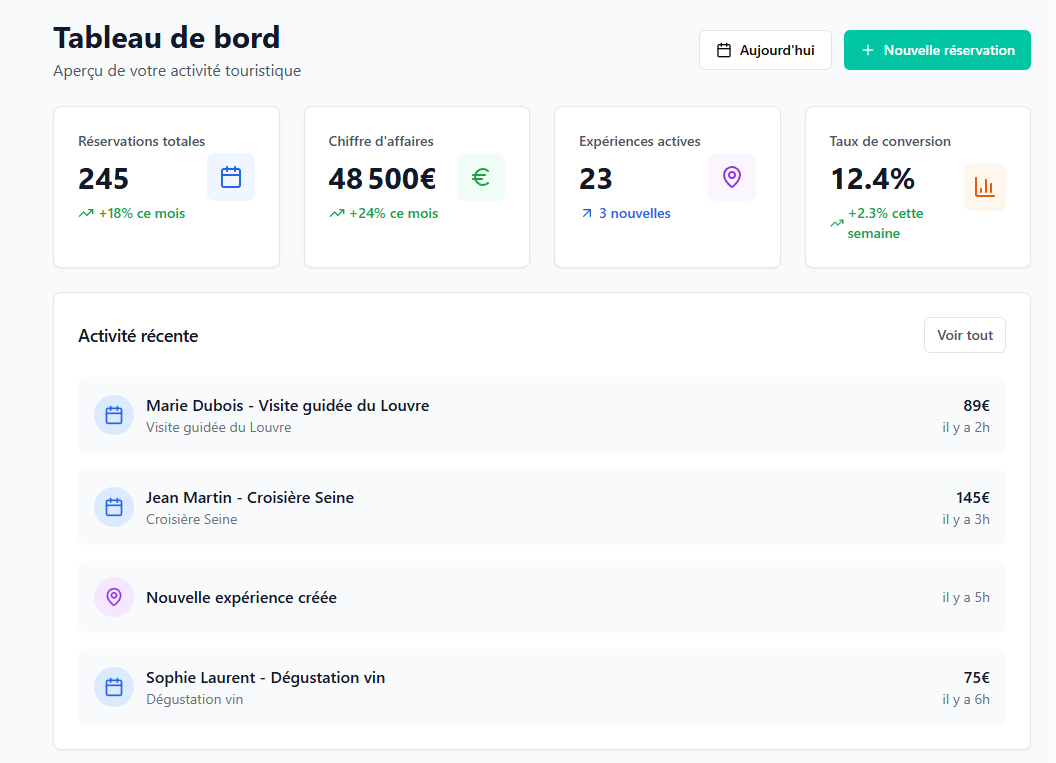
When the business grows, the software handles all operations: scheduling, payments, invoicing, accounting exports, equipment and guide management. A mountain-circuit operator can manage their snowshoe bookings, their seasonal guides and their accounting from a single back office — with no third-party tool.
💡 Launch your tourism activity with Tourbiz
With Tourbiz, manage your bookings, your OTAs and your accounting from a single back office. Start for free with the Freemium plan — no fixed fees, you only pay on your sales.
Request a quoteConclusion
There isn’t one good business idea in activity tourism: there’s a good idea for you, in your territory, with your skills and your investment level. What keeps an activity going over time isn’t the originality of the concept — it’s rigour in execution: a clearly positioned offer, a well-built distribution, controlled cost management from the very first season.
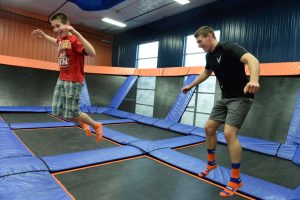
Among the most promising indoor leisure concepts, opening a trampoline park attracts families and birthday parties, provided you master the budget and regulations.
The sector is accessible. The tools to get started have never been simpler. What rarely lacks is the idea. What often makes the difference is the preparation.
FAQ
Which tourism activity is the most profitable? ↓
Do you have to set up a company to start a tourism activity? ↓
How do you set your prices when launching a tourism activity? ↓
Should you sign up on OTAs from launch? ↓
Is booking software useful from the start? ↓
Immersive tech is gaining ground, and virtual reality opens new ways to showcase an experience.