📌 Key takeaways
- A payment method for a tourism activity is any channel that lets you collect payment from a customer: online card payment, contactless, payment link, deposit or instalments.
- Offering online payment at the time of booking strongly reduces no-shows and secures cash flow before the service.
- Card payment remains the standard, but deposits and split payments increase the conversion rate on high-priced activities.
- Any professional can accept bank cards: all you need is an acceptance contract and a payment solution linked to your booking tool.
- Setting it up takes four steps: choose your payment methods, select a provider, connect the booking tool, then test the collection.
Your customers book a kayak outing, a guided tour or a diving baptism from their sofa, often on a Sunday evening. At that precise moment, only one question matters to them: can they pay right away, simply, without calling or sending a cheque? If the answer is no, many close the tab and move on to the provider next door. The payment method is therefore not a technical detail at the end of the journey: it’s one of the last locks between a booking intention and a sale actually collected.
In a tourism activity, choosing your payment methods well means collecting faster, limiting last-minute cancellations and offering an experience on a par with players like GetYourGuide or Viator. This guide reviews the available options, the rules to know and the concrete method to set everything up with peace of mind.
What is a payment method for a tourism activity?
A payment method is the channel through which a customer pays for their booking, whether remotely when booking or on-site on the day of the service. In tourism and leisure, these channels have a particularity: the sale is often concluded several days, or even several weeks, before the activity takes place. The right tool must therefore be able to collect in advance, handle a deposit and secure the balance.
The following families are generally distinguished:
- Online card payment, integrated into the website or booking engine, which collects when the customer books.
- In-person payment via a terminal (card reader) or a smartphone, useful for on-site sales and contactless.
- Payment links sent by email or SMS, handy for a booking taken by phone.
- Flexible payments: deposit, down payment, or instalments for high-priced services.
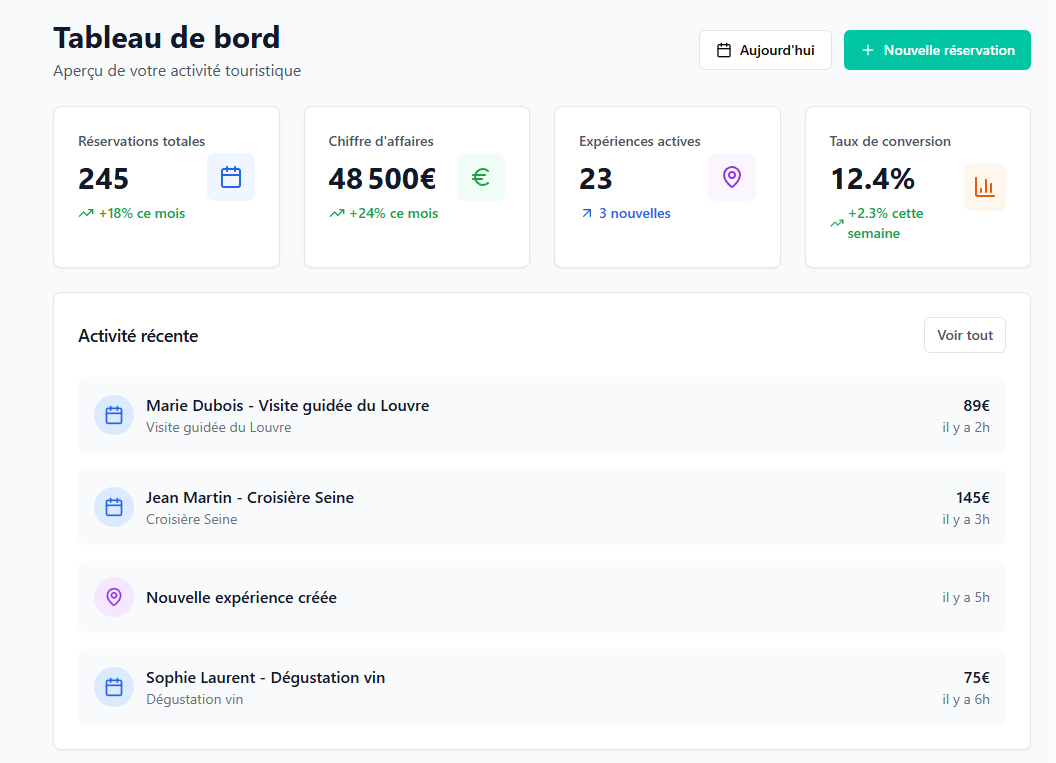
At Tourbiz, we designed our booking software so these different channels coexist in a single back office, rather than juggling a till, a website and a spreadsheet.
Which payment methods should you offer for a tourism activity?
There’s no universal payment method, but a combination suited to your type of activity, your average basket and your dominant sales channel. A leisure base with online ticketing doesn’t have the same needs as an independent guide who mainly sells on-site. The table below summarises the most common options and their typical use.
| Payment method | Typical use | Main advantage | Indicative fees |
|---|---|---|---|
| Online bank card | Remote booking via the site | Immediate collection, anti no-show | 1 to 2.5% per transaction |
| Contactless / card reader | On-site sale on the day | Fast, secure, up to €50 | Subscription or commission |
| Payment link (email / SMS) | Booking taken by phone | No website required, traceable | 1 to 2.5% per transaction |
| Deposit / down payment | High-value activities | Secures cash flow | Depends on provider |
| Instalments | Premium stays and gift boxes | Increases conversion | 2 to 4% depending on the offer |
For a provider, the challenge isn’t activating all these methods, but linking the ones they choose to their booking tool to avoid double entry. At Tourbiz, our connection to your payment system lets you plug in your payment solution and find each payment attached to its booking, automatically.
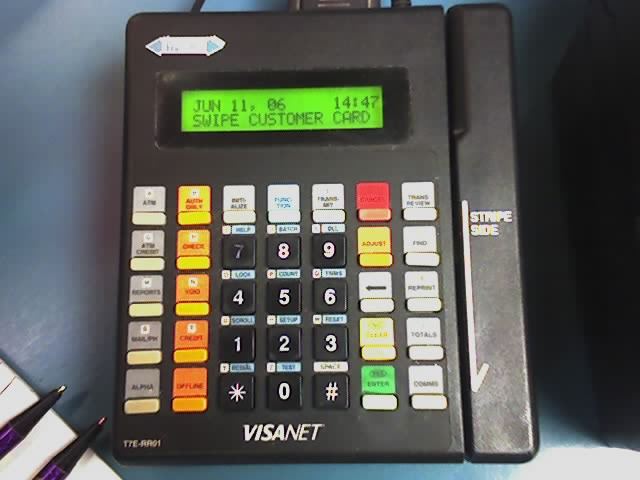
💡 Good to know: Contactless card payment is capped at €50 per operation in France. Above that, the customer must enter their PIN: plan for this case if you sell high-basket services on-site.
What rules govern the payments of a tourism activity?
Accepting payments involves a few simple but real obligations. Any professional can offer bank cards provided they sign an acceptance contract with an approved institution, and remains free to set a minimum collection amount as long as it’s clearly displayed (economie.gouv.fr). On the security side, strong customer authentication (3D Secure) has become the norm for any online payment, which protects the provider against fraudulent unpaid transactions.
The second point concerns invoicing: every collection, including a deposit, must give rise to a compliant invoice. It’s therefore better to link payment and invoicing from the start. We detailed these obligations in our provider invoicing guide for tourism, which notably distinguishes a deposit from a down payment, two concepts with different legal consequences in the event of cancellation.
Why is the payment method decisive for a tourism activity?
The payment method acts directly on three economic levers: the conversion rate, the cancellation rate and cash flow. A smooth booking journey that ends with immediate payment converts more visitors into customers, whereas a deferred payment leaves time for doubt to set in.
Payment at booking is also the best protection against last-minute absences. A customer who has already paid, even just a deposit, almost always shows up. That’s what our clients observe daily, and we explain it in detail in our article on no-shows and cancellations: asking for a financial commitment, even partial, makes lost slots plummet.
⚠️ Watch out! Don’t bet everything on on-site payment. An activity collected only on the day is exposed to free cancellations and empty slots impossible to resell. The online deposit is your best insurance.
How to set up the right payment methods for a tourism activity?
Setting up your payment methods requires neither advanced technical skill nor a big budget. The method comes down to four concrete steps, applicable whether you’re starting from scratch or want to professionalise a still-artisanal collection. Each is done with specific tools, in a few dozen minutes in total.
Step 1: map your sales channels in a spreadsheet
Before any purchase, take a snapshot of your business. A free spreadsheet is enough: Google Sheets (with a Google account) or Excel online on office.com. Proceed as follows:
- Create four columns: Sales channel, Share of bookings, Current payment, Gap.
- Take your last 50 bookings (calendar, emails or software) and note, for each, the channel: website, phone, on-site, or a platform like GetYourGuide.
- Count in 20 minutes and derive a clear figure, for example “70% online, 20% on-site, 10% by phone“.
This figure decides where to invest first: a provider at 70% online secures web payment first, a guide who closes face-to-face bets first on mobile contactless.
Step 2: create your account with a payment provider
Then choose your provider according to the dominant channel spotted in step 1. Here are the three solutions most used by tourism professionals, with their real cost:
| Solution | Ideal for | Entry cost | Commission |
|---|---|---|---|
| Stripe | Online payment on the site | Free, no subscription | 1.5% + €0.25 / transaction (European cards) |
| SumUp Air | On-site collection (card reader) | ≈ €29 the reader (often €19 on promo) | 1.75% / card payment, no subscription |
| PayPlug | French multichannel merchants | From ≈ €9/month | Depending on plan |
To open a Stripe account, go to dashboard.stripe.com with your business registration number and your bank details (IBAN): allow 10 minutes. Always think in real cost: on a €90 kayak outing, Stripe takes €1.60 and SumUp €1.58 — a few cents against a booking lost for lack of simple payment. Above all, check that the solution handles 3D Secure authentication and pays out funds within 2 to 7 days.
Step 3: connect payment to your booking software
This is the step that changes everything day-to-day, and it’s done without a line of code. In your booking software, the connection takes three clicks:
- Open Settings → Payments.
- Click “Connect Stripe”.
- Log in on the Stripe page that opens and authorise the connection.
From now on, every payment automatically attaches to the right booking, which switches to “Paid” status with no action from you. You eliminate the double entry and the reconciliation errors that cost half a day at month-end on managing your tourism bookings.
Step 4: test with a test card, then activate the deposit
Before opening payments to your real customers, validate the journey in test mode. Follow this short checklist:
- Switch Stripe to “Test mode” (toggle at the top of the dashboard).
- Pay with the test card 4242 4242 4242 4242, any future expiry date and any 3-digit CVC.
- Run the whole journey: booking → payment → receipt → refund.
- Switch back to live mode and activate the deposit on your high-value services, for example 30% at booking and the balance on-site — i.e. a €36 deposit on a €120 service.
You thereby secure your cash flow while leaving flexibility for the customer, and you halve last-minute cancellations.
💡 Ready to collect your bookings effortlessly?
Connect your payment system, manage your deposits and find every payment attached to its booking with Tourbiz, the software designed for tourism professionals.
Create my free accountHow does Tourbiz simplify payments for tourism professionals?
At Tourbiz, we started from an observation shared by our clients: they were wasting a huge amount of time reconciling payments scattered between a till, a website and bank statements. Our approach is therefore to centralise everything. You link your payment solution, and every payment, whether online, by link or on-site, attaches itself to the corresponding booking.
Concretely, we handle the deposit, the balance and payment tracking in the same dashboard. You see at a glance what’s paid, what’s still owed and what’s collected. To go further, our payment system integrations leave you free to keep your current provider without starting from scratch.
🎯 Our tip: At Tourbiz, our providers who activate the online deposit report mainly two gains: far fewer absences on the day, and accounting that’s much simpler to close at month-end.
Conclusion
Profitability starts with the numbers, and understanding your travel agency margin tells you where to act.
Choosing your payment methods means balancing simplicity for the customer with security for your business. The right reflex is to offer online card payment from booking, reserve contactless for on-site sales, and activate the deposit on your most committing services. The essential remains: linking all these channels to your booking tool so you never chase a payment again. It’s this automation, more than the choice of a specific provider, that saves time and durably secures the cash flow of a tourism activity.