

What do we mean by ‘margin’ in a tourism activity?
The margin is much more than just a simple accounting indicator: it is the thermometer of the economic health of a tourism activity. It measures profitability and the ability of an actor to transform its revenue into real profit.
In tourism, three types of margins are generally distinguished:
- Gross margin: the difference between the selling price and the direct cost of the service (accommodation, transport, guides, etc.).
- Operating margin: evaluates revenues after accounting for operating expenses (salaries, marketing, tools). It is a good reflection of daily performance.
- Net margin: the final result after taxes and various charges. It indicates the true capacity of the company to generate profit.
In Tourbiz, you can configure and track any type of margin.
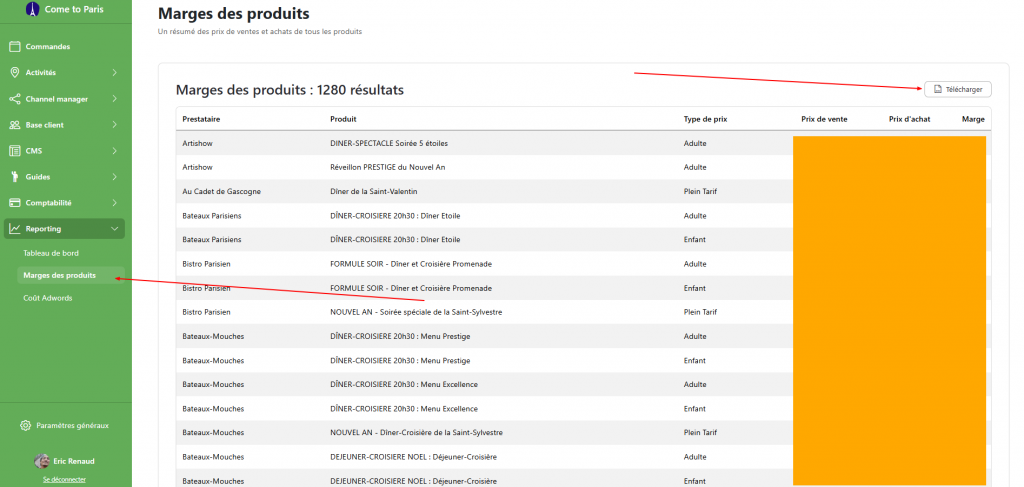
But tourism has its own specificities: seasonality, OTA commissions, dependence on fixed costs (licenses, structures, permanent staff) and variable costs (providers, transport, extras). These factors mean that a margin can vary greatly depending on the periods.
To effectively manage profitability, it is essential to track a few key indicators:
- Occupancy or fill rate
- Customer acquisition cost (CAC)
- Average revenue per booking (RevPar/trip)
- Weight of OTA commissions in revenue
An analytical approach and data centralization are essential to understand these movements. Discover how to better track your indicators in our guide on sales tracking and tourism management.
Why is optimizing margins crucial for a tourism actor?
The tourism sector is one of the most competitive in the world. Margins are often tight, and every percentage point counts. Optimizing margins is therefore about protecting profitability — but also agility.
Three factors make this optimization essential:
- Increased competitive pressure: the proliferation of platforms and new customer expectations (immediacy, personalization, sustainability) push prices down.
- Direct impact on viability: an optimized margin allows for investment in service quality, marketing, or new customer experiences.
- Proactive management of unforeseen events: inflation, currency fluctuations, or health crises can erode profits overnight.
To face these challenges, tourism actors must build a strategy capable of absorbing seasonal fluctuations without compromising profitability. This involves precise cost management, agile pricing, and constant reassessment of distribution channels.
In this context, mastering your pricing policy from the design stage becomes a strategic weapon. You can delve deeper into the subject with our article dedicated to dynamic pricing in tourism.
How to identify the most profitable optimization levers?
Before taking action, you need to know where to lose. Identifying the right levers starts with a detailed reading of your expenses and revenue channels. Each cost must be linked to a real value generated.
First step: analyze your operating costs. Accommodation, transport, OTA commissions, guide remuneration, tool maintenance… The goal is not to cut blindly, but to determine what creates (or destroys) margin.
- Audit your partnerships and suppliers to spot sub-optimal costs.
- Measure profitability by channel: Booking, GetYourGuide, your site, etc.
- Compare your variable costs by season to adjust your expenses at the right time.
Next, reassessing your distribution strategy is key. Too much dependence on OTAs can eat into your profitability. Conversely, a high-performing direct channel can boost your results at a lower cost.
For example, OTAs that you can connect to Tourbiz may take between 20% and 30% of margin on your sales!
Finally, integrate automation tools to reduce administrative burden. In 2025, an agency or tour operator without digital integration will lose a major competitive advantage. Automating accounting, invoicing, or scheduling tracking frees up time and money.
To deepen this diagnosis, discover our comprehensive guide on OTAs and their impact on your margins.
What concrete strategies can be implemented to improve margins?
Once your levers are identified, it’s time for action. Improving margins is a sum of intelligent and coordinated adjustments, not a revolution overnight. Here’s what we can advise you as concrete actions to better control your tourism margins.
#1. Adjust pricing policy according to demand
Real-time price management has become the norm. The ‘one-price-for-all-season’ is dead. By leveraging past data and current demand, you can adapt your prices for each period — without degrading your image.
- Increase prices in high season or during major local events.
- Smooth demand in low season through packaged offers.
- Test ‘premium’ formulas for high-margin segments.
#2. Negotiate with your partners and suppliers
Every external service (transport, accommodation, guides, catering) directly impacts your margin. An annual renegotiation can be enough to gain several points of profitability. Also consider diversifying your partners to reduce dependencies.
#3. Develop direct sales and cross-sell/up-sell
Encouraging sales without intermediaries means regaining control over your revenue. This involves a smooth booking site, an active CRM, and a solid loyalty strategy. Then, focus on complementary sales: a private tour, a VIP option, a personalized transfer…
#4. Focus on digitalization and performance marketing
Centralize your bookings, automate emails, track your performance in real-time: technology is your best ally. A data-driven approach optimizes not only your customer acquisition but also your margin per operation. You might also consider activating certain marketing channels like Google Things To Do, an advertising product from Google dedicated to travel actors that works very well.
Good news, we integrate a Google Things To Do feature with Tourbiz.
To learn how to boost your visibility while improving your margins, explore our article on the way to find clients in tourism.
How can Tourbiz help me manage and increase my margins?
Tourbiz is not just a management tool: it is a true cockpit for managing your margins on a daily basis. By centralizing sales, commissions, and performances, it simplifies your decision-making and maximizes every point of profitability.
Centralized view of your sales and performance
No more scattered Excel files and vague estimates. Tourbiz offers you a consolidated view of all your channels: website, OTAs, partners, on-site sales. You immediately know where you are gaining — and where you are losing — margin.
- Real-time analysis of revenue and margin by seller or channel.
- Automatic tracking of OTA and partner commissions.
- Customizable dashboards to spot seasonal trends.
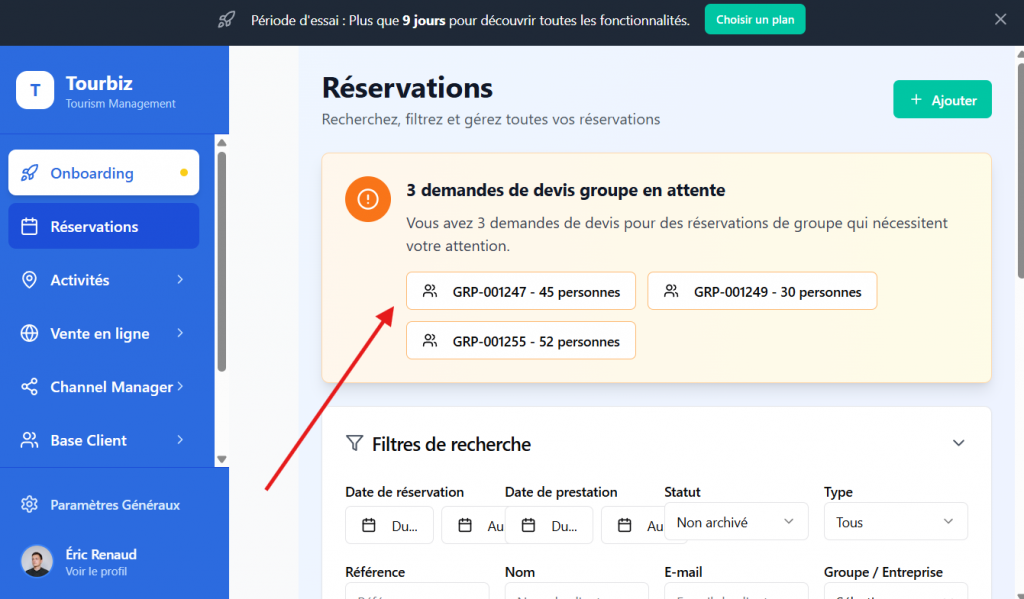
Seamless integration with your partner platforms
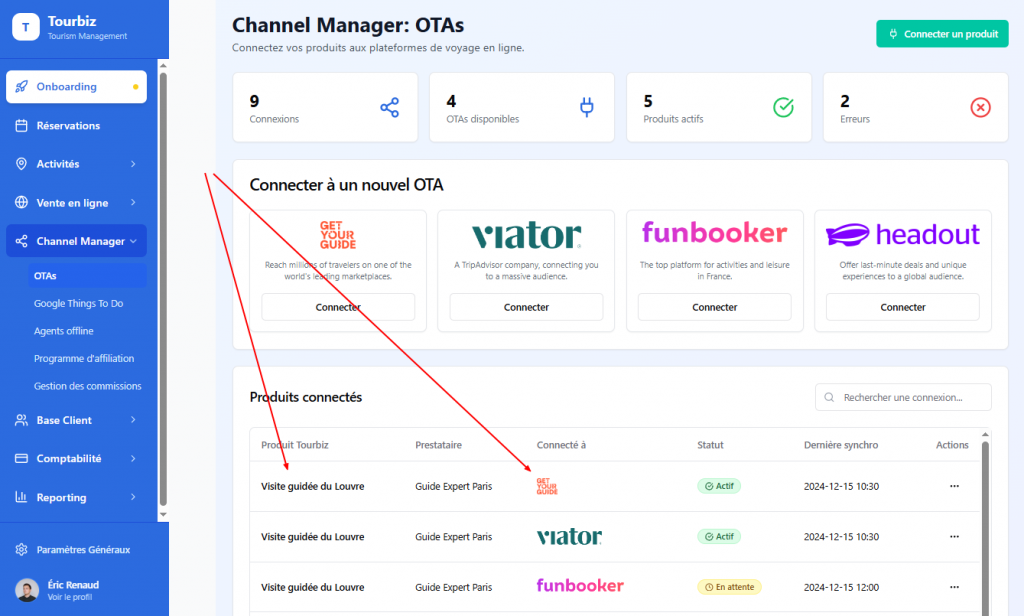
Tourbiz natively integrates with market leaders: GetYourGuide, Viator, Funbooker… These connections ensure data reliability and avoid reporting errors. Less back-and-forth, more clarity, more margin.
You can also find our evaluation of the platforms in the GetYourGuide vs Viator comparison guide to identify where to focus your distribution efforts.
Automation of invoicing and real-time cost tracking
Time is margin. Tourbiz automates your time-consuming tasks: invoicing, payment tracking, commission calculation, sales summary. These functions eliminate human errors and streamline your financial flow from end to end.
- Automatic invoicing from confirmed bookings.
- Instant tracking of costs by service and by season.
- Alerts and reports to anticipate declines in profitability.
Practical case: connect Tourbiz to GetYourGuide to boost your revenue
Specifically, the Tourbiz x GetYourGuide integration allows you to:
- Automatically import your sales and availability to keep stock always up to date.
- Track the performance of each activity published on GetYourGuide without leaving your dashboard.
- Analyze margin by circuit or by date to adjust your prices in real-time.
Result: you save time, reduce your intermediation costs, and increase your profits without additional effort. For a quick implementation, follow our comprehensive guide to connect Tourbiz to GetYourGuide.