
What is a well-planned cruise itinerary?
A well-planned cruise itinerary is the balance between operational efficiency, logistical fluidity, and impeccable customer experience. In other words, it all starts well before the first boarding.
Cruise itineraries consist of several successive trips, often in the same geographical area, with variations in stops, durations, or types of clientele. For a shipping company, this represents a complex puzzle where every piece counts: ports, teams, suppliers, routes, onboard activities.
Even before plotting the routes on a map, here are the parameters to anticipate:
- The routes: geographical coherence, tourist attractiveness, navigable distances.
- The stops: quality of port infrastructure, boarding times, local partnerships.
- The duration: balance between pace and rest, adaptation to the profile of travelers.
- The season: weather, crowds, prices of port services, or even local events.
But planning is not limited to a simple roadmap:
- Logistics: inventory management, crew coordination, synchronization with service providers.
- Port coordination: docking slots, formalities, local regulations.
- Customer experience: fluidity of transfers, comfort, overall satisfaction.
A well-thought-out itinerary maximizes useful time and limits unforeseen events. It lays the foundations for a profitable and memorable cruise. To learn more about the concrete management of tourist flows, discover how to effectively manage your bookings and anticipate demand.
Why is good planning essential for the success of a cruise?
Good planning not only makes the difference between a smooth trip and a logistical nightmare. It is a direct lever on profitability and brand perception. Cruisers expect impeccable experiences. Operators, on the other hand, seek to reduce margins of error.
Here’s how rigorous planning translates concretely:
- Profitability and satisfaction: each optimized stop, each well-calculated route reduces costs and improves loyalty.
- Management of teams and material resources: clear planning avoids task overlaps and promotes onboard cohesion.
- Reduction of unforeseen events: unfavorable weather, port changes, or technical failures, everything can be partially anticipated thanks to good structure.
Planning also means anticipating low periods. A clear vision of the annual calendar helps balance the workload while managing low-season clients without losing profitability.
Finally, smart planning does not rely solely on tools or processes. It is a mindset: that of a company that wants to grow sustainably while keeping quality at the center.
How to prepare and structure your tour planning step by step?
Planning a cruise itinerary is primarily about building a solid framework on which each cruise will be grafted. The watchword: method and anticipation.
Here’s a simple four-phase journey:
- 1. Analyze the market and routes: Study seasonal demand, preferences of your target clientele, and emerging trends. The routes must be not only attractive but also profitable.
- 2. Coordinate with port actors and suppliers: Each port has its constraints regarding slots and services. Communication in advance with port authorities and logistical partners ensures a smooth process.
- 3. Optimize the calendar: Use centralized tools to synchronize bookings, maintenance, transfers, and supplies. Unified management reduces the risk of human error and streamlines decision-making.
- 4. Balance onboard and stops: Too many stops exhaust, too much sea bores. The ideal is to adapt the pace of the cruise to the traveler’s profile to maintain a constant level of satisfaction.
An effective planning is therefore a balance between strategic vision and daily execution. To reinforce this approach, learn to optimize your pricing policy according to seasonality (see our article on dynamic pricing), destinations, and demand: a key asset to stabilize your margins and attract the right travelers at the right time.
What tools to use to optimize the planning of your cruises?
Technology has become the silent captain of tourist planning. The right tools not only save time but also allow you to visualize and anticipate every variable: weather, bookings, maintenance, crew availability.
Specifically, three categories of tools stand out:
- Specialized SaaS planning tools: They centralize routes, manage availability, and automate updates between services. Ideal for medium to large companies looking to professionalize their process.
- CRM and booking software: Thanks to them, sales teams track in real-time sales, cancellations, and customer feedback, while keeping a valuable history to adjust future offers.
- Internal communication platforms: Connecting onboard teams, logistics staff, and headquarters via integrations like WhatsApp or Slack makes collaboration smoother and more responsive.
To choose your tools, rely on interoperable solutions that can integrate with your partners and marketplaces. For example, check out our guide on connecting Viator and GetYourGuide to automate the synchronization of your offers and bookings with the main B2B platforms in the sector.
In 2025, the key to a successful itinerary lies less in complexity than in technological coordination: a unique, connected ecosystem capable of learning from each trip.
Plan your cruise itineraries more easily with Tourbiz
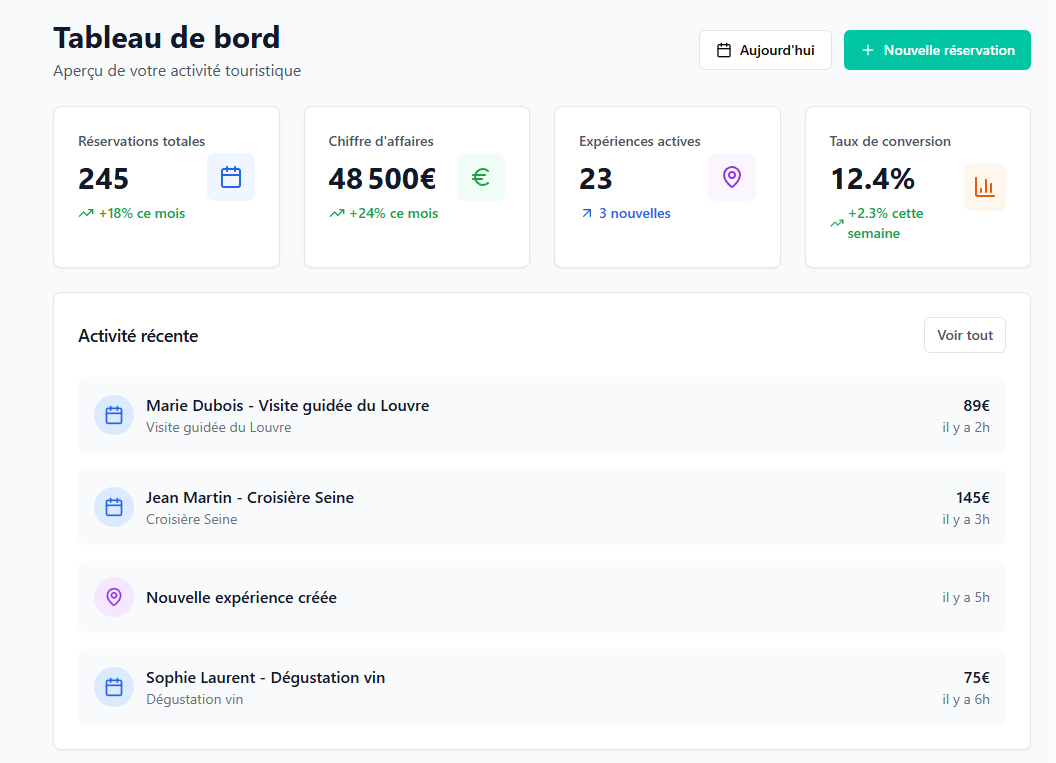
Tourbiz was designed for a simple goal: to save time for operators while enhancing the accuracy and fluidity of their planning. For shipping agencies, it is a digital co-pilot that centralizes everything: routes, crews, partners, suppliers, and reporting in one space.
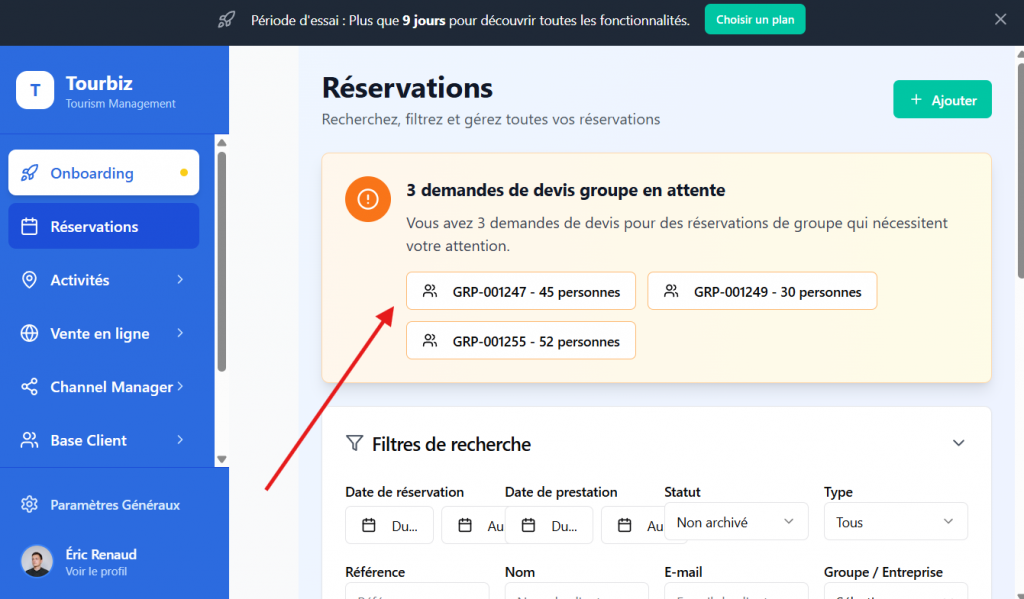
Here’s how Tourbiz simplifies cruise logistics:
- Management of routes and itineraries: Create and duplicate your circuits, adjust stops according to the season, and visualize your ships’ capacity in real-time.
- Automatic synchronization of schedules: The tool updates bookings, availability, and technical interventions without double entry.
- Simplified sharing with partners: Collaborative access allows your port service providers or local guides to follow the planning without friction.
- Decision-making dashboard: Clear indicators on profitability, occupancy rates, and customer satisfaction help adjust your strategies.
Concrete example: we have a client who offers six consecutive cruises in the Mediterranean on two ships. Thanks to Tourbiz, he can notably:
- plan ship rotations and stops according to the weather and season;
- centralize crew availability and briefs for each stop;
- share onboard information with technical partners in just a few clicks;
- and automatically export reports for the sales department.
The strength of Tourbiz also lies in its ecosystem of integrations. You can for example sell on the main distribution platforms via the connection to GetYourGuide or another OTA, and automatically synchronize availability, activities, and bookings.
To get more from each slot, yield management adjusts your prices to real demand.
In a sector where every minute counts, Tourbiz transforms the planning of cruise itineraries into a clear, collaborative experience perfectly tailored to your business objectives.